
WaterSense, Flush Volume, and Commercial Toilet Performance
A practical guide for architects, plumbing engineers, facility teams, and restroom product specifiers comparing WaterSense criteria, flush volume targets, sensor-actuated flush valves, and real commercial toilet performance.

Efficiency Must Still Flush
Commercial toilet selection is no longer a simple gallons-per-flush comparison. A low flush volume can reduce water demand, but the fixture still has to clear the bowl, move waste through the trapway, support drainline carry, and perform predictably under high-use restroom conditions.
For specifiers, the best choice is not always the lowest number on a cut sheet. It is the toilet-and-valve combination that balances code alignment, water savings, bowl performance, supply pressure, maintenance access, and user satisfaction.
Think System, Not Fixture
A commercial toilet is part of a system: bowl geometry, flushometer valve, supply pressure, sensor logic, drainline slope, usage frequency, and maintenance routines all affect final performance. WaterSense helps narrow the field, but a project specification should still confirm the complete operating context.
This is especially important in airports, schools, hospitals, stadiums, retail centers, office towers, and hospitality projects where thousands of flush events can occur each week.
WaterSense Basics
WaterSense is the U.S. Environmental Protection Agency program used to identify plumbing products that meet defined water-efficiency and performance criteria. For commercial flushometer-valve water closets, the WaterSense target is not simply “use less water.” The labeled product must stay within the required flush-volume range and meet performance criteria that support real restroom use.
Read More Read Less : WaterSense flush-volume categories
Performance Factors
A strong commercial toilet specification should look beyond the water-use number. The fixture must work repeatedly, cleanly, and predictably across the operating conditions of the building.
Waste Extraction
The bowl must clear representative waste and toilet paper in a single flush. For specifiers, this is where verified performance testing matters more than marketing language.
Bowl Cleaning
Flush volume must be delivered with enough pattern, velocity, and rim coverage to clean the bowl surface. Poor bowl wash leads to complaints even when drainline carry is acceptable.
Read More Read Less : drainline carry, valve matching, pressure stability, and service access
Specifier Note
WaterSense labeling is helpful, but project teams should still request product data, installation instructions, compatible bowl and valve pairings, rough-in diagrams, sensor programming notes, maintenance access details, and commissioning records.
The most reliable commercial restroom specifications combine efficiency targets with measurable performance requirements and a clear maintenance plan.
Flush Volume Chart
The chart below shows an illustrative water-use comparison for a 20-toilet commercial restroom group with 120 flushes per toilet per day. Actual savings depend on occupancy, gender distribution, operating days, user behavior, leakage, fixture age, and utility rates.
Calculation: 20 toilets × 120 flushes per toilet per day × 365 days × stated gallons per flush.
Office Tower Retrofit
EPA uses a 10-story office building example to show that replacing older inefficient flushometer-valve toilets with WaterSense-labeled models can produce large annual water and utility savings. The practical lesson for specifiers is simple: the biggest savings often come from replacing legacy high-volume fixtures first.
For an existing building, begin with a restroom audit. Confirm fixture markings, flushometer model numbers, flush volumes, age, leak conditions, flush frequency, and maintenance history. Then rank upgrades by savings potential, failure risk, occupant complaints, and access constraints.
Read EPA Case Data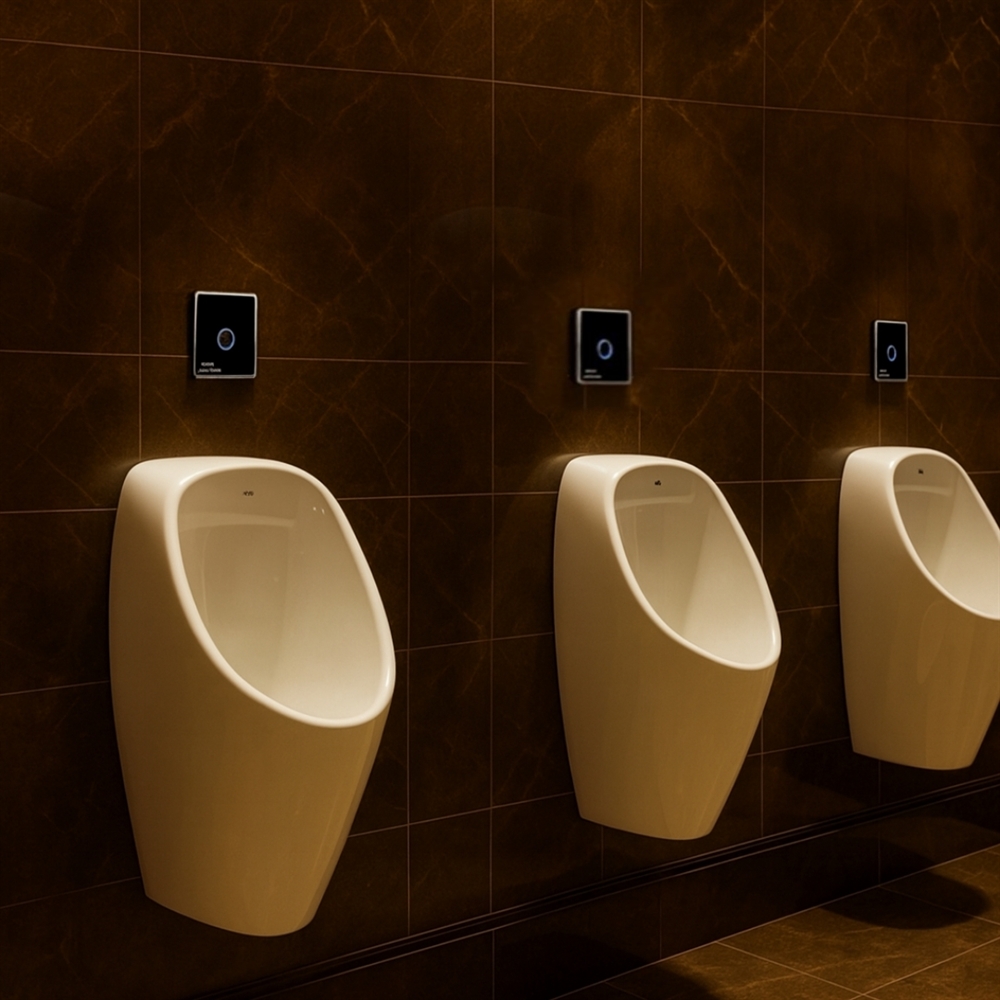
New Project Logic
In new construction, the goal is not retrofit recovery. The goal is to prevent poor fixture coordination before installation. Confirm the water closet, flushometer, carrier, rough-in, wall depth, supply pressure, sensor power source, and service panel location before the submittal is approved.
This avoids a common high-efficiency mistake: specifying a good valve and a good bowl that were not reviewed as a complete operating pair.
Sensor Controls
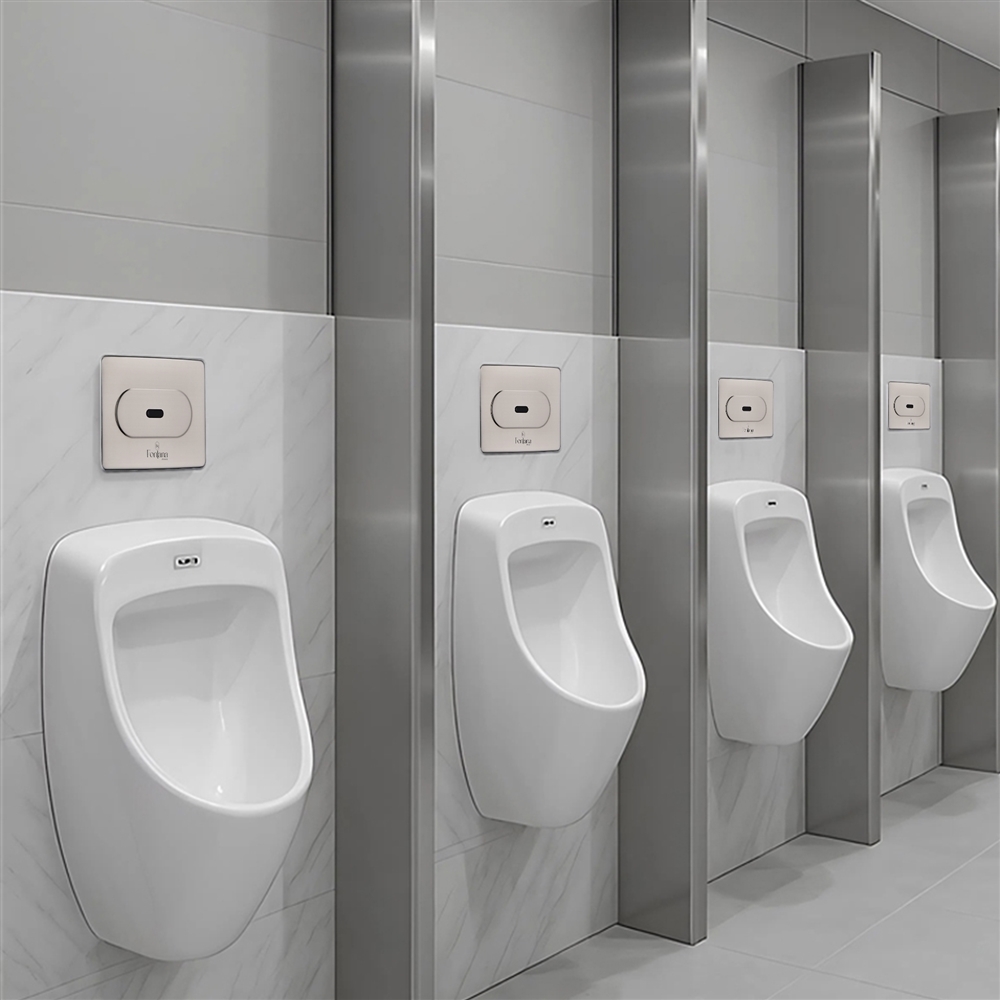
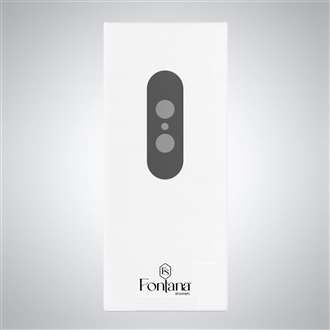
Automatic flush valves improve touch-free operation and can support a cleaner public restroom experience. However, sensors do not automatically create water savings by themselves. If the detection range, delay, lockout, or courtesy-flush logic is poorly adjusted, a restroom can experience double flushing or phantom flushing.
For sensor-actuated flushometers, the specification should include commissioning. Record the detection range, activation delay, manual override function, power source, battery access, flush duration, maintenance mode, and post-installation test results.
Read More Read Less : IR sensors, ToF sensors, and manual override
Selection Matrix
Use this matrix when comparing high-efficiency commercial toilet options during design development or submittal review.
| Specifier Question | Why It Matters | Preferred Evidence |
|---|---|---|
| Is the fixture WaterSense labeled? | Supports water-efficiency and performance screening. | WaterSense listing, product data, certification documentation. |
| Is the valve matched to the bowl? | Prevents under-flush or poor bowl wash. | Manufacturer-approved combination list. |
| What is the rated gpf? | Controls water demand and code alignment. | Cut sheet, label, and test documentation. |
| What is the supply pressure range? | Flushometer valves need adequate pressure and flow. | Engineering data and project pressure calculations. |
| How will sensors be commissioned? | Reduces double flushes, phantom flushes, and callbacks. | Startup checklist and closeout record. |
| How is the valve serviced? | High-use restrooms need fast repair access. | Exploded diagram, access panel plan, spare parts list. |
Specifier Checklist
Read More Read Less : performance and installation checklist
Specification Language
The sample language below can be adapted by the project engineer or specification writer. Always coordinate with local code, authority having jurisdiction, manufacturer data, and project plumbing calculations.
Read More Read Less : sample specification language
FAQ
Is 1.28 gpf always better than 1.6 gpf?
Not automatically. A 1.28 gpf fixture can reduce water use, but it must still be compatible with the bowl, supply pressure, and drainline conditions. Use certified performance data and project-specific engineering review.
Why does WaterSense include a 1.0 gpf minimum for commercial flushometer toilets?
Commercial drainlines may need enough water to move waste through the system. The minimum helps prevent selection of fixtures that are too low for reliable drainline transport.
Do automatic flush valves save water?
They can support hygiene and consistent operation, but the sensor must be programmed correctly. Poor settings can cause extra flushes, so commissioning and maintenance are essential.
What should be checked before approving a submittal?
Review WaterSense status, rated flush volume, compatible bowl-and-valve combination, pressure range, rough-in dimensions, sensor settings, power source, service access, and maintenance documentation.
What is MaP testing?
MaP, or Maximum Performance testing, is a third-party toilet performance resource used by specifiers to compare tested waste-removal performance and water use across models.
Reference Sources
Use these source buttons for technical review, specification support, and further research. Each button opens in a new tab.