
Commercial Restroom Technologies That Reduce Touchpoints and Simplify Maintenance
The best commercial restroom technologies do more than look modern. They remove shared touchpoints, control water use, simplify cleaning routes, and help facility teams prevent small restroom issues from becoming daily complaints.
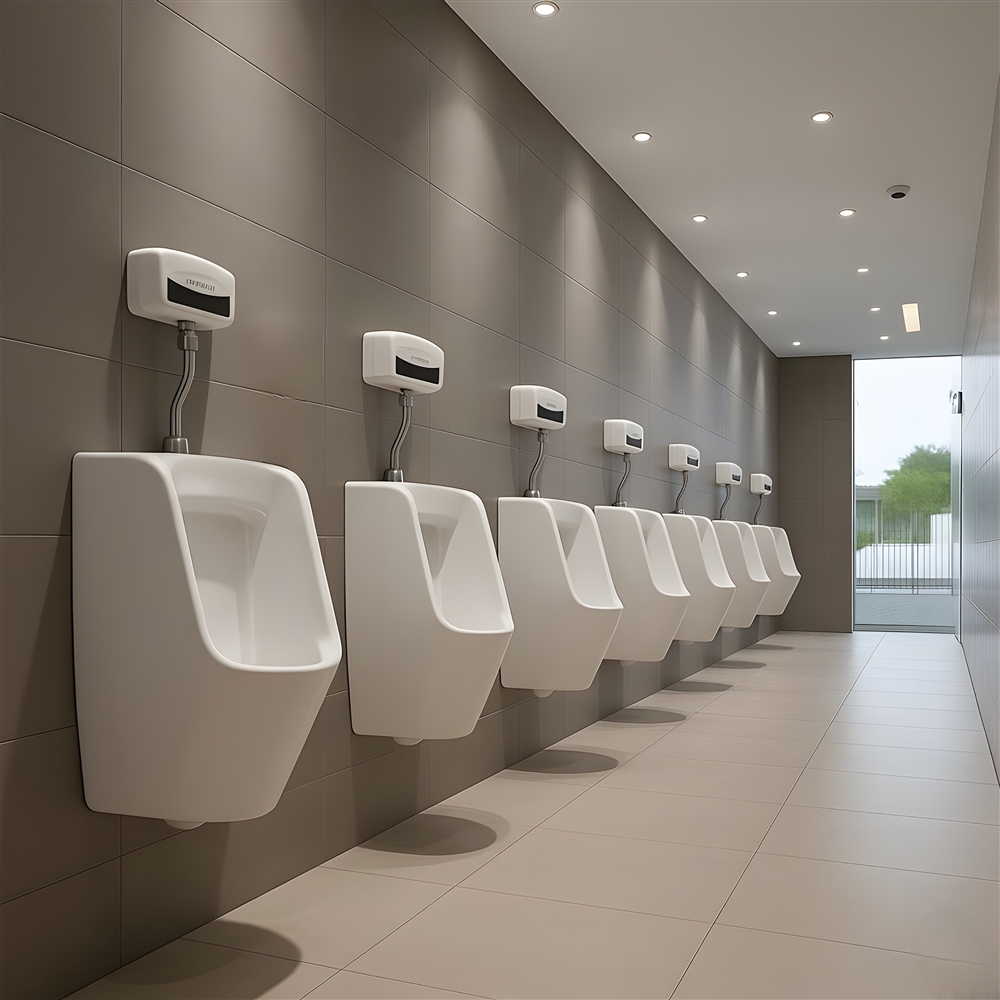
Why Touchpoints Matter
In a busy commercial restroom, every handle, button, latch, dispenser lever, and faucet knob becomes part of the user experience. The more people interact with the same surface, the more often that surface needs attention from the cleaning team. That is why high-traffic facilities are moving toward touchless restroom systems that reduce contact, improve fixture consistency, and make maintenance more predictable.
The goal is not to install technology for its own sake. A strong restroom upgrade should reduce manual contact, limit water waste, improve accessibility, and make daily inspection easier. For airports, schools, offices, stadiums, hospitals, retail centers, and hospitality buildings, this usually means combining automatic flush valves, sensor faucets, touchless soap dispensers, hands-free drying, smart monitoring, and durable easy-clean materials.
Practical takeaway: The best restroom technology stack removes repeated hand contact first, then supports maintenance with better water control, supply visibility, leak alerts, and simplified cleaning surfaces.
Commercial Restroom Technologies for Lower-Touch Operations
The following solutions can reduce hand-contact points while supporting hygiene, maintenance planning, durability, and long-term facility value.
Automatic Flush Valves
Sensor-operated flush valves remove the need to touch manual handles on toilets and urinals. In high-use restrooms, they also help standardize flushing behavior, which can reduce odor complaints and improve fixture readiness between users.
- Reduces contact with flush handles.
- Supports consistent bowl and urinal clearance.
- Works well in airports, offices, schools, and stadiums.
- Choose vandal-resistant housings for public environments.
Sensor Faucets
Commercial sensor faucets use infrared detection, a solenoid valve, and a metered flow cycle to turn water on only when hands are present. This reduces handle contact and helps limit unnecessary run time.
- Removes faucet-handle touchpoints.
- Controls run time more consistently than manual faucets.
- Pairs well with low-flow aerators.
- Battery, hardwired, or hybrid power options are available.
Touchless Soap Dispensers
Soap dispensers are used immediately before handwashing, so reducing contact here is especially useful. Bulk-fill or cartridge systems can also improve janitorial planning when refill access is simple.
- Removes push-button dispenser contact.
- Encourages a smoother handwashing sequence.
- Can reduce visible residue around counters.
- Best paired with matching sensor faucets.
Hands-Free Drying
Automatic hand dryers and touchless paper towel dispensers reduce contact with levers and cranks. The right choice depends on restroom traffic, noise limits, waste hauling costs, and user expectations.
- Removes manual towel-lever touchpoints.
- Can reduce paper handling and overflow.
- Sensor paper dispensers suit quiet environments.
- High-speed dryers suit waste-reduction goals.
Smart Restroom Monitoring
Smart restroom systems use sensors to monitor occupancy, supply levels, leaks, odors, temperature, and maintenance events. Instead of checking every restroom on a fixed route, staff can prioritize rooms that need service first.
- Tracks soap, paper, and trash levels.
- Alerts teams to leaks or overflow risks.
- Supports usage-based cleaning schedules.
- Can connect to CMMS work order systems.
Doorless Entries
Where the layout allows, a privacy-screened doorless restroom entry can remove one of the most repeated touchpoints: the main restroom door handle. This is especially useful in airports, malls, stadiums, and large public venues.
- Removes entry and exit door contact.
- Improves traffic flow during peak periods.
- Requires careful sightline and privacy planning.
- Works best with strong ventilation design.
Technology Comparison Chart
Use this chart as a planning reference when deciding which commercial restroom technologies should be prioritized for a project.
| Technology | Touchpoint Reduced | Maintenance Benefit | Suitable Applications | Specification Note |
|---|---|---|---|---|
| Automatic flush valves | Toilet and urinal handles | More consistent flushing, fewer user complaints, improved odor control | High-traffic public restrooms | Confirm flush volume, valve rough-in, battery or hardwire access, and fixture compatibility. |
| Sensor faucets | Faucet handles | Reduced run time, controlled flow, fewer wet counters from users leaving taps open | Offices, hospitality, healthcare, schools, retail | Review sensor range, flow rate, mixing valve requirements, power type, and service access. |
| Touchless soap dispensers | Soap push buttons | Cleaner counter zones, easier refill planning, smoother handwashing sequence | Any public or employee restroom | Choose cartridge or bulk-fill based on labor model, vandal risk, and refill frequency. |
| Touchless drying | Towel levers and dryer buttons | Less manual contact; potential waste reduction with dryers or controlled dispensing with paper | Retail, education, offices, transportation | Balance noise, energy, waste hauling, ADA reach range, and user preference. |
| Smart restroom monitoring | Reduces unnecessary inspection cycles | Usage-based cleaning, supply alerts, leak detection, faster response | Large campuses and multi-restroom buildings | Plan gateway coverage, battery life, privacy notices, dashboard ownership, and CMMS integration. |
| Doorless entries | Main door handles | Improved traffic flow and fewer door-handle cleaning tasks | Large venues and public buildings | Requires privacy, accessibility, fire/life-safety, and ventilation review. |
How to Evaluate Restroom Technology Options
Evaluate fixtures against practical, project-specific criteria instead of unsupported percentage scores or a universal ranking. The right combination depends on usage patterns, service capacity, plumbing conditions, and accessibility requirements.
Shared-Contact Reduction
Identify which manual controls users touch most often and where hands-free operation can make the clearest difference.
Service and Reliability
Review battery changes, spare parts, sensor cleaning, shutoff access, vandal resistance, and maintenance staff workload.
Building Compatibility
Check fixture connections, water pressure, power access, reach ranges, local code requirements, and long-term monitoring needs.
Planning note: selection criteria should reflect building type, user volume, local code, cleaning labor, water rates, and manufacturer documentation.
Technical Specification Priorities
A commercial restroom upgrade should be specified like a system, not a collection of isolated fixtures.
Sensor Performance
Sensor fixtures must detect users reliably without false activation. For faucets, the sensing zone should match the lavatory depth and mounting location. For flush valves, the sensor should account for user position, stall dimensions, and fixture type.
- Specify adjustable sensor range where possible.
- Avoid reflective surfaces that confuse infrared sensors.
- Test activation under expected lighting conditions.
- Include an override or service mode for maintenance.
Power Strategy
Battery systems simplify retrofit work, while hardwired fixtures reduce battery replacement labor. Hybrid systems can be useful when uptime is critical but electrical access is limited.
- Use hardwired power for new construction when practical.
- Use long-life batteries for selective retrofits.
- Record battery type and replacement cycle in the maintenance plan.
- Keep access panels reachable without removing major finish materials.
Water Efficiency
Restroom water savings depend on flow rate, flush volume, metering behavior, sensor timing, and user volume. Automatic operation is most effective when paired with correctly selected fixtures and regular calibration.
- Confirm public lavatory faucet flow limits.
- Check toilet and urinal flush volumes against project goals.
- Use pressure-compensating aerators where appropriate.
- Document settings after commissioning.
Accessibility and Reach
Touchless does not automatically mean accessible. Fixture height, clear floor space, knee clearance, reach range, approach direction, and operable parts still need to be reviewed under applicable accessibility standards.
- Coordinate with ADA and local accessibility rules.
- Confirm dispenser and dryer reach ranges.
- Keep sensor activation intuitive from seated and standing positions.
- Avoid placing accessories where they block required clearances.
Case Reference
The following illustrative scenario shows how a facility team can combine technologies into one practical upgrade path.
High-Traffic Office Tower Upgrade
A multi-floor office tower with frequent restroom complaints can begin with the highest-contact fixtures first. An initial upgrade may include automatic flush valves, sensor faucets, touchless soap dispensers, and touchless towel dispensers. A subsequent upgrade can add smart monitoring for soap levels, paper levels, occupancy, and leak alerts.
This approach helps maintenance teams move from reactive cleaning to scheduled, data-supported service. Instead of checking every restroom at the same frequency, staff can focus on rooms with high use, low supplies, or active alerts.
Maintenance Plan
Touchless systems still require inspection. The difference is that a well-designed system makes maintenance more predictable and less dependent on user reports.
Weekly Checks
- Clean sensor lenses with approved non-abrasive methods.
- Check faucet activation and shutoff timing.
- Confirm soap dispensing volume.
- Inspect flush valve activation from normal user positions.
Monthly Checks
- Review battery status or power connections.
- Inspect aerators and strainers for debris.
- Check smart sensor dashboard alerts.
- Verify supply-level sensors match actual inventory.
Quarterly Checks
- Recalibrate sensors if false activations appear.
- Review water-use changes by floor or restroom group.
- Inspect valves, seals, and mounting hardware.
- Update cleaning routes based on occupancy patterns.
Planning a Restroom Technology Upgrade
For most buildings, the practical approach is to begin with the fixtures people touch most often, then add monitoring where maintenance teams need better visibility.
- Replace manual flush handles with automatic flush valves.
- Install commercial sensor faucets at public lavatories.
- Add touchless soap dispensers to complete the handwashing zone.
- Upgrade drying with sensor paper dispensers or automatic hand dryers.
- Add leak, occupancy, odor, and supply sensors for larger facilities.
- Review doorless entries and material upgrades during major renovations.

Procurement Checklist
Before ordering restroom technology, confirm that each product fits the building, the maintenance team, and the expected traffic level.
| Checklist Item | Why It Matters | What to Confirm |
|---|---|---|
| Traffic level | Heavy-use restrooms need stronger housings, faster service access, and durable finishes. | Daily users, peak periods, vandal risk, and cleaning frequency. |
| Power access | Power choice affects installation cost and future maintenance labor. | Battery, hardwired, plug-in transformer, or hybrid design. |
| Water pressure | Fixtures perform best within manufacturer pressure ranges. | Static pressure, dynamic pressure, mixing valves, and pipe sizing. |
| Code and accessibility | Touchless fixtures must still meet applicable plumbing and accessibility rules. | Local plumbing code, ADA requirements, reach ranges, and clearances. |
| Service parts | Fast repairs depend on available cartridges, solenoids, batteries, aerators, and seals. | Parts list, warranty, stocking plan, and technician training. |
| Data ownership | Smart restroom systems collect operational data that must be managed responsibly. | Dashboard access, alert routing, privacy notices, and CMMS connection. |
Frequently Asked Questions
Common questions about commercial restroom technologies, touchless fixtures, and smart maintenance.
What is the best technology for reducing restroom touchpoints?
Automatic flush valves, sensor faucets, touchless soap dispensers, and hands-free drying provide the most direct reduction in shared hand-contact points. For larger buildings, smart restroom monitoring adds maintenance value by improving visibility into usage, supplies, leaks, and cleaning needs.
Do touchless restroom fixtures reduce maintenance?
They can reduce certain maintenance problems, especially issues caused by users leaving water running, overhandling parts, or reporting empty supplies late. However, touchless fixtures still need planned inspection, sensor cleaning, power checks, and occasional calibration.
Are automatic flush valves worth it for commercial restrooms?
In high-traffic restrooms, automatic flush valves are often worth considering because they reduce handle contact and create a more consistent flush experience. The best results come from matching the valve to the fixture, traffic level, water pressure, and maintenance access.
Should sensor faucets be battery powered or hardwired?
Battery-powered sensor faucets are useful for retrofits because they reduce electrical work. Hardwired faucets are often better for new construction or high-volume restrooms because they reduce battery replacement labor. Some projects use hybrid systems for backup reliability.
What should a smart restroom system monitor?
A practical smart restroom system can monitor occupancy, soap levels, paper levels, trash status, water leaks, odors, temperature, humidity, and user feedback. The most useful systems connect alerts to the facility team’s daily workflow instead of creating a separate dashboard no one checks.
Reference Sources
The following external resources support the cleaning, water-efficiency, accessibility, ventilation, plumbing, and sustainability points discussed in this guide. Each button opens in a new tab.
Build a Cleaner Restroom System
Commercial restroom technology works best when the design reduces touchpoints, controls water use, supports accessibility, and gives maintenance teams better visibility. Start with automatic flush valves and sensor faucets, then build toward a smarter restroom program with supply monitoring, leak alerts, and usage-based cleaning.