
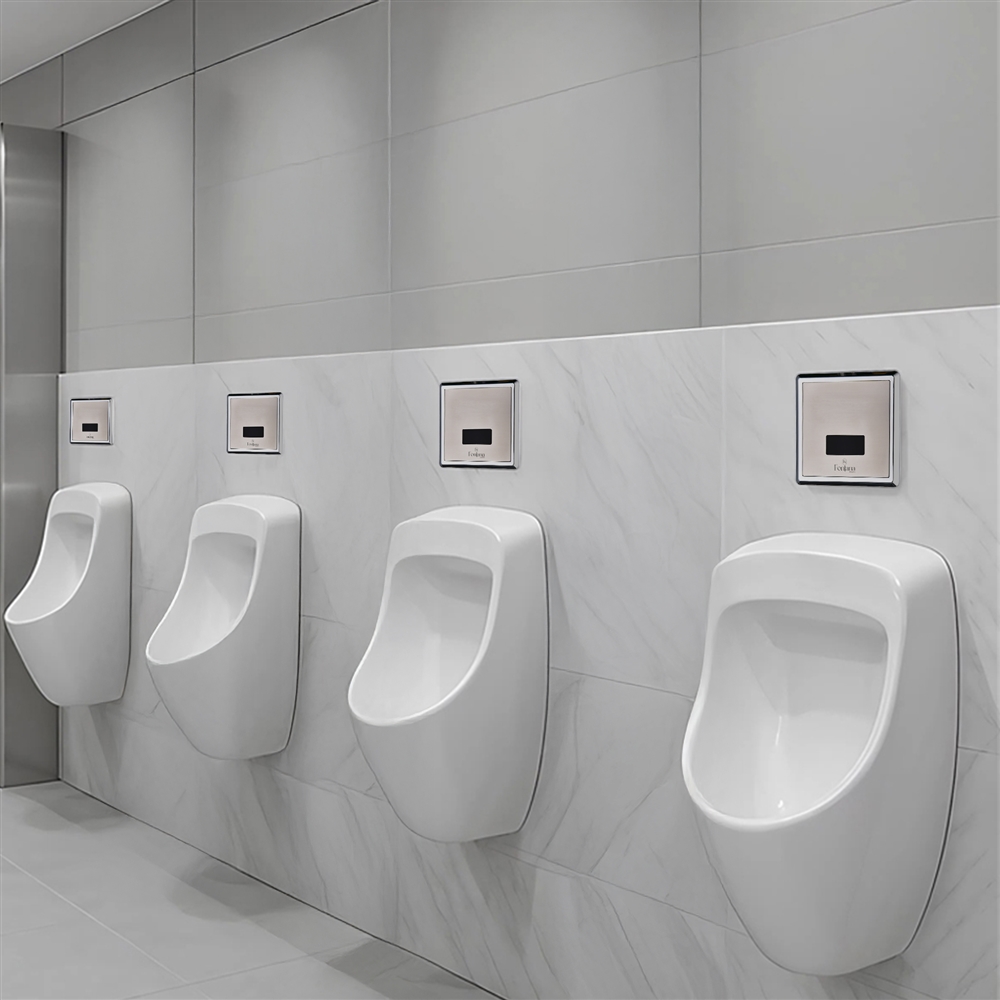
Automatic Flush Valves for Healthcare Facilities
What architects should know before specifying touchless flush valves for hospitals, clinics, senior care facilities, outpatient centers, and medical office buildings.
Why It Matters
Automatic flush valves are no longer a small restroom accessory in healthcare design. In patient-facing facilities, they support touchless operation, help reduce user contact with shared restroom surfaces, and create a cleaner operating rhythm for high-traffic plumbing fixtures.
For architects, the bigger issue is coordination. A flush valve must work with the toilet or urinal fixture, water pressure, power strategy, wall construction, cleaning protocol, accessibility layout, infection-control goals, and long-term maintenance plan. A good specification is not only about choosing a sensor valve. It is about making the restroom work safely, consistently, and efficiently for patients, staff, visitors, and facility teams.
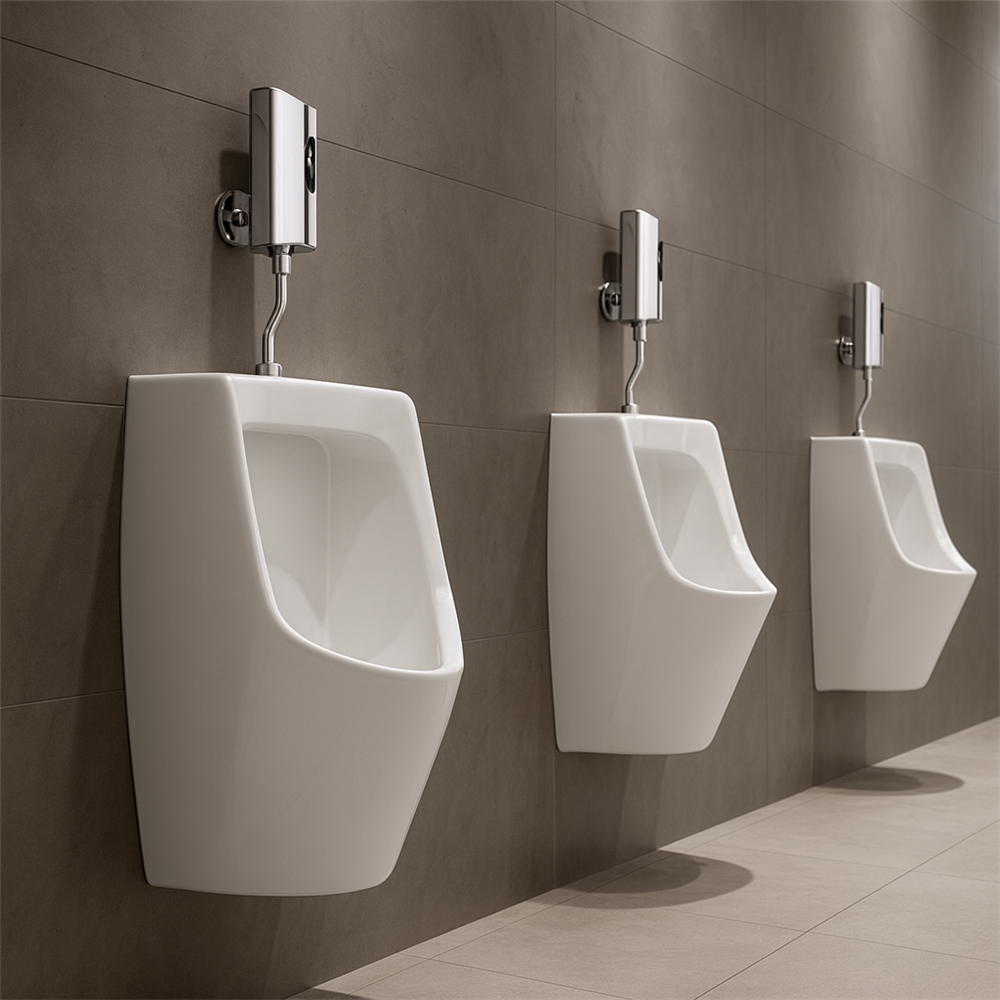
Flush Valve Product Views
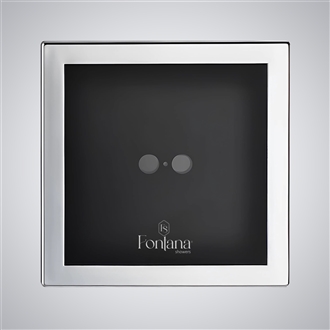
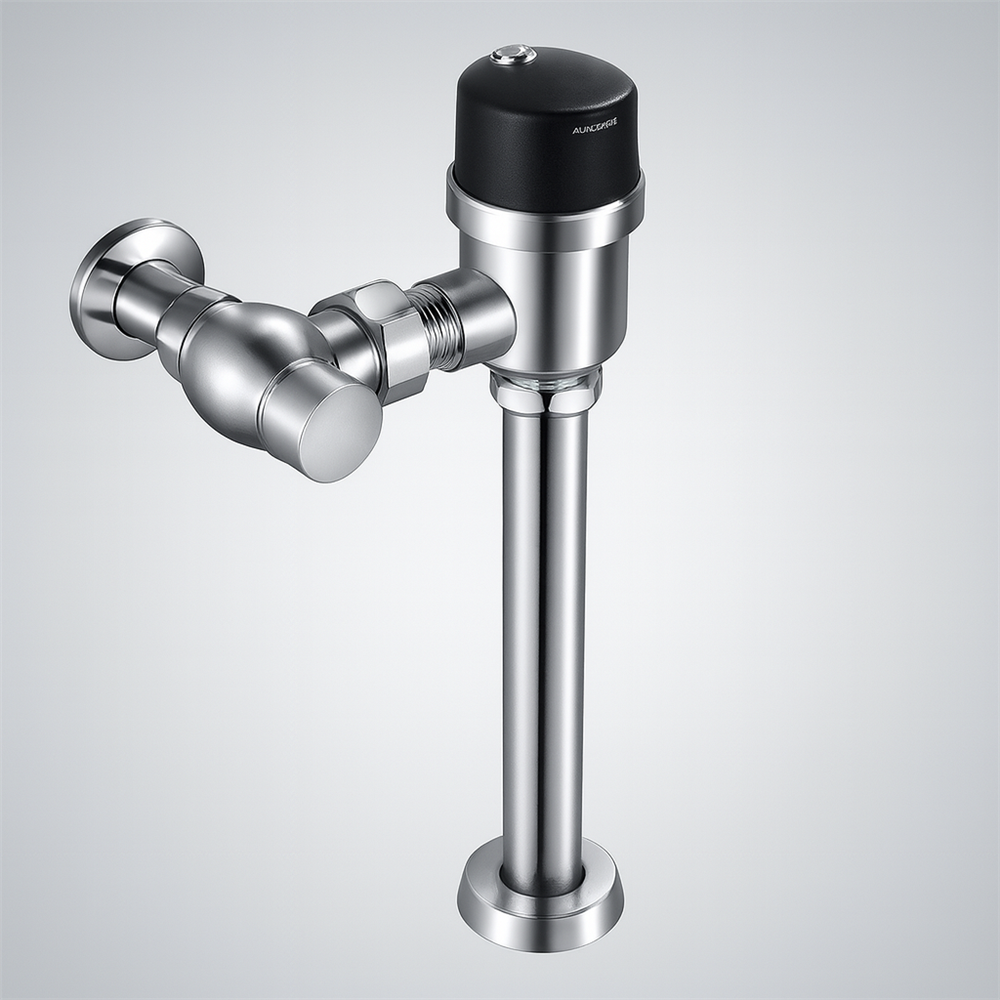
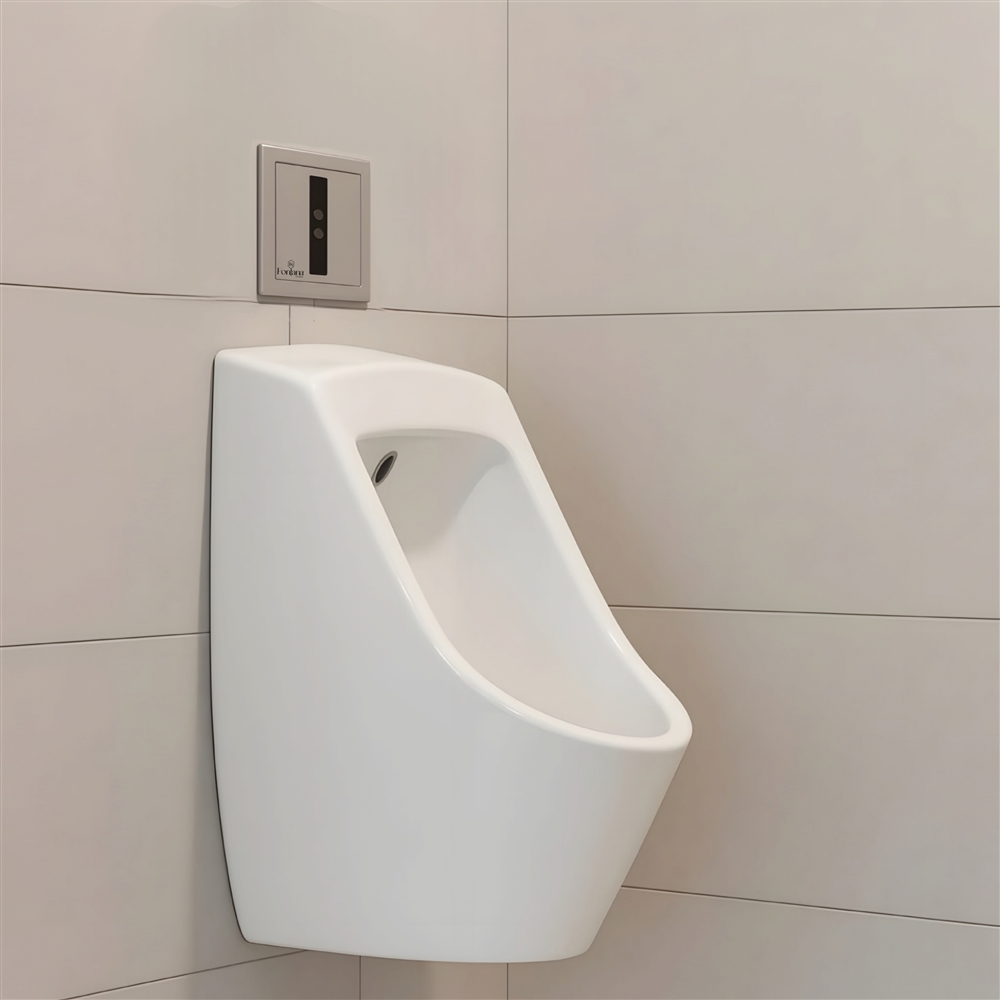
Healthcare projects often require a balance between clean appearance, durable construction, service access, and reliable sensor activation. The product examples below show different automatic flush valve styles that can be considered for clinical, public, and high-traffic commercial restroom environments.
How They Work
An automatic flush valve uses a sensor to detect occupancy or user movement and then activates the flush cycle after the user leaves the detection zone. Most commercial models use infrared sensing, battery power, hardwired power, or a hybrid power option. The valve body controls the water discharge while the sensor controls timing and activation.
In healthcare facilities, sensor logic should be predictable. False activations waste water and can disturb patients. Missed activations create cleanliness problems. Architects should coordinate sensor range, toilet-room geometry, reflective surfaces, grab bars, partitions, lighting, and user approach paths before finalizing the fixture schedule.
| Component | What It Does | Architect Coordination |
|---|---|---|
| Sensor module | Detects the user and triggers the flush cycle. | Check sightline, mounting height, partition spacing, and reflective surfaces. |
| Valve body | Controls water delivery through the fixture. | Match the valve type to fixture pressure, rough-in, and water-closet or urinal use. |
| Power source | Supplies energy to the sensor and actuator. | Decide battery, hardwired, or hybrid early so electrical and maintenance teams can plan access. |
| Manual override | Allows flushing if the sensor fails or service is needed. | Place where staff can reach it without compromising accessibility or cleanability. |
| Stop and service access | Allows isolation and maintenance of the valve. | Keep access visible and practical for maintenance staff, especially in locked or clinical areas. |
Design Priorities
Healthcare restroom specifications should balance infection control, user safety, accessibility, water performance, and maintenance. A flush valve that saves water but creates drainline issues is not a good healthcare solution. A sensor valve that looks clean but is hard to service can increase facility downtime.
The chart below gives a practical specification weight model for early design discussions. It is not a universal code requirement. It is a planning tool architects can use with plumbing engineers, facility managers, and infection-prevention teams.
Healthcare Zones
Not every restroom in a medical building has the same risk profile. A public lobby toilet room, patient-room toilet, emergency department restroom, staff restroom, and outpatient clinic restroom may all need different durability, privacy, maintenance, and sensor settings.
| Facility Area | Design Concern | Recommended Specification Focus |
|---|---|---|
| Hospital public restrooms | Heavy visitor traffic, frequent use, cleaning cycles. | Durable exposed or concealed valves, vandal resistance, predictable sensor activation, easy service access. |
| Patient-room toilets | Patient safety, staff assistance, accessible layout. | ADA coordination, clearances, manual override, quiet operation, staff-friendly maintenance. |
| Emergency department restrooms | High turnover, abuse resistance, fast cleaning. | Rugged construction, secure components, simple service points, reliable sensor detection. |
| Senior care facilities | User balance, reach, caregiver support, fall prevention. | Open-side coordination, grab bar clearance, accessible control location, low-maintenance power strategy. |
| Outpatient clinics | Moderate traffic, patient comfort, operational efficiency. | Water efficiency, clean appearance, battery-life planning, simple fixture standardization. |
ADA Access
Accessibility is one of the most important design issues for flush valves in healthcare environments. For accessible water closets, hand-operated flush controls must comply with ADA operating-parts requirements and must be located on the open side of the water closet, except where specific ambulatory compartment rules apply. The U.S. Access Board also notes that flush controls installed behind the toilet can create injury or balance concerns when a user leans back.
Automatic valves can reduce the need to operate a handle, but architects should still coordinate manual override placement. If a backup button or override is provided, it should not force awkward reach, conflict with grab bars, or sit in a location that is difficult for staff to access during service.
Water Use
Water efficiency matters in healthcare, but it should not be handled as a simple race to the lowest flush volume. Flushometer-valve toilets need enough water to move waste through the bowl, trapway, and drainage system. EPA WaterSense guidance for flushometer-valve toilets uses a maximum of 1.28 gallons per flush and includes a minimum flush volume of 1.0 gallon per flush to support drainline performance.
For urinals, high-efficiency flushing options can reduce water use significantly when correctly matched to the fixture and maintenance program. Architects should avoid specifying water-saving valves in isolation. The valve, fixture, pipe slope, building age, usage pattern, and cleaning protocol should be reviewed together.
| Fixture Type | Common Efficient Target | Design Caution |
|---|---|---|
| Flushometer water closet | Up to 1.28 gpf for WaterSense-labeled models. | Confirm minimum flow, fixture compatibility, and drainline performance before reducing flush volume. |
| Dual-flush water closet | Reduced flush for liquid waste and full flush for solids. | Consider whether users, patients, and visitors will understand the activation method. |
| Flushing urinal | High-efficiency models commonly target 0.5 gpf or less. | Coordinate trap seal, cleaning schedule, odor control, and maintenance staff expectations. |
Power + Maintenance
Automatic flush valves can be battery powered, hardwired, or designed with a hybrid approach. Battery power can simplify retrofit work, while hardwired power can reduce routine battery replacement in large facilities. Healthcare projects should evaluate both first cost and service cost.
Maintenance access should be visible in the design set. A beautiful restroom can become a facility problem if valve parts are difficult to reach, replacement batteries are hidden behind awkward panels, or isolation stops require disruptive work.
Infection-Control Logic
Automatic flush valves reduce direct hand contact with flush controls, but they do not replace a healthcare facility’s broader infection-control program. Restroom design still needs proper cleaning, ventilation, hand hygiene access, water-management procedures, and maintenance oversight.
Healthcare water systems can support the growth and spread of waterborne pathogens when risk factors are not managed. For that reason, flush valve selection should be coordinated with the facility’s water-management program, especially in hospitals, long-term care, and other settings that serve vulnerable patients.
Architects should also think about aerosol awareness. Toilet and urinal flushing can contribute to droplets and aerosols in restroom environments. Flush valve selection alone cannot solve that issue, so design teams should coordinate fixture layout, ventilation, cleaning frequency, toilet lids where applicable, and room exhaust strategy.
Case Lens
Consider a two-story outpatient clinic with public restrooms near the waiting area, staff restrooms near clinical work zones, and patient restrooms near exam rooms. The design team may want one standard valve family for easier maintenance, but each restroom type can still receive different settings or power strategies.
For public restrooms, the priority may be durable exposed sensor valves with vandal-resistant features and fast maintenance access. For patient restrooms, the priority may be accessibility, staff assistance, quiet operation, and reliable manual override. For staff restrooms, the priority may be standardization, long battery life, and low service disruption.
This approach keeps the specification simple while still respecting the different ways healthcare restrooms are used.
Spec Checklist
Use this checklist before issuing construction documents or approving substitutions.
Common Mistakes
| Mistake | Why It Matters | Better Approach |
|---|---|---|
| Choosing the lowest flush volume only | Can create performance or drainline concerns if the system is not designed for it. | Balance efficiency with tested fixture performance and plumbing engineer review. |
| Ignoring manual override placement | Staff need a reliable way to flush during sensor failure, cleaning, or service. | Coordinate override access with ADA clearances and maintenance workflow. |
| Late power coordination | Hardwired valves need early electrical planning, while batteries need service planning. | Define the power approach during design development, not after submittals. |
| Overlooking cleaning chemicals | Healthcare cleaning routines can be demanding on finishes and sensor covers. | Review finish durability and manufacturer maintenance instructions. |
| Accepting unreviewed substitutions | Substitutions may change sensor range, flow rate, power needs, or ADA coordination. | Require equal performance, compatible dimensions, and documented compliance. |
FAQ
Are automatic flush valves required in healthcare restrooms?
They are not universally required for every healthcare restroom, but they are commonly specified because they support touchless operation, modern hygiene expectations, and high-traffic restroom management.
Are sensor flush valves ADA compliant?
They can be part of an ADA-compliant restroom when the full fixture layout, control location, reach range, clear floor space, grab bars, and manual override placement are properly coordinated.
Should architects specify battery or hardwired valves?
Battery valves can simplify retrofits. Hardwired valves can reduce battery replacement in large facilities. New hospitals and major renovations should compare both options with electrical, plumbing, and facility maintenance teams.
What flush volume should be used?
The right flush volume depends on fixture type, code requirements, WaterSense goals, drainline design, and building conditions. Many efficient flushometer-valve toilets use up to 1.28 gpf, but the plumbing system must still support reliable waste transport.
Do automatic flush valves solve infection control?
No. They reduce touchpoints, but infection control also depends on cleaning, ventilation, water management, hand hygiene, maintenance, and facility procedures.
Reference Sources
The following buttons link to authority resources used for technical context, healthcare water-management considerations, accessibility coordination, water-efficiency guidance, and healthcare facility planning.
Design Restrooms That Work
Automatic flush valves for healthcare facilities should be specified as part of a complete restroom system: touchless operation, accessibility, water performance, maintenance access, and infection-control coordination.